




The paradox every good safari eventually reveals
Almost everyone arrives in East Africa with a plan they feel good about. It includes the right places, sensible transfer logic, and clear highlights they hope to experience. Then the trip begins, and the moments people remember most are often the ones that were never written into that original schedule.
A leopard appears on a return track during flat midday light when everyone expected nothing. A herd crossing builds slowly in a corner nobody prioritized at briefing. A birding detour in Samburu (Kenya) turns into one of the strongest sessions of the whole route. A quiet late-afternoon drive in Amboseli (Kenya), originally treated as a backup, becomes the emotional center of the journey.
In our 15 years of field operation across East Africa, we see this pattern constantly. The best safari memories are not random luck. They are usually the result of disciplined flexibility, where guides and travelers adjust intelligently while protecting core field windows.
A direct definition that helps set expectations
In real safari planning, a good itinerary is not a fixed script. It is a structured framework with planned decision points.
At Bobu Africa, we usually treat three nights in one primary ecosystem as the practical baseline for adaptive safari quality. Three nights usually means six prime field sessions. One transfer day often costs two prime wildlife windows.
Those baseline rules matter because flexibility without structure becomes chaos, and structure without flexibility becomes missed opportunity.
Why wildlife timing rarely follows your original plan

Wildlife movement is influenced by local weather, prey distribution, human pressure, territorial shifts, and random ecological interactions. Even in reliable ecosystems like Maasai Mara (Kenya) or Serengeti (Tanzania), no guide can guarantee that your best encounter will happen exactly when your itinerary expected it.
That is not a weakness of safari. It is the reason safari remains meaningful.
Travelers who understand this early usually enjoy better outcomes. They stop judging success by whether one forecasted event happened on one specific drive. They start judging quality by repeated high-value sessions, intelligent adaptation, and emotional depth.
A strong safari is not defined by one dramatic sighting, but by repeated high-quality field sessions.
The planning mistake behind most disappointment
The most common disappointment pattern is over-attachment to a pre-trip image. Travelers lock onto one expected moment and unintentionally devalue everything else.
In our 15 years of field operation across East Africa, we see this mistake most often in trips where expectations are highly specific but time buffers are minimal. The itinerary may still deliver excellent wildlife, but guests feel off target because the trip did not match the mental storyboard.
The correction is simple but important.
– Keep clear goals
– Hold goals lightly in daily execution
– Let field evidence guide session decisions
This is not lowering standards. It is raising strategic realism.
Disciplined flexibility versus improvised randomness
Flexibility works only when it is built into route design. Otherwise it becomes reactive and inconsistent.
Disciplined flexibility includes:
– protected dawn and late-afternoon windows
– enough nights per ecosystem to absorb variation
– clear daily objectives with room to pivot
– guide authority to re-sequence sessions when conditions shift
– traveler understanding of why changes are made
Improvised randomness looks different:
– constant plan changes without objective
– chasing radio noise all day
– no clear trade-off logic
– fatigue accumulation from unplanned movement
The first model improves outcomes. The second usually reduces them.
Where unplanned moments most often come from
1. The transition windows
Many memorable encounters happen during transitions, not peak expectation periods. Late return tracks, post-rain clears, and shoulder-hour movement often produce surprising activity.
2. The second or third revisit
A territory that looked quiet in the morning can transform in later sessions. Repeated access is why longer stays outperform quick pass-through routes.
3. The objective shift moments
A drive planned for cats may pivot to elephants, birds, or landscape behavior when field conditions indicate stronger value elsewhere. These pivots often become trip highlights.
4. The weather breaks
Cloud openings, wind direction changes, and temperature shifts can quickly alter movement quality. Guides who read these signals early create opportunities that rigid schedules miss.
Why this matters differently for traveler types
First-time safari travelers
First-timers often need emotional confidence that the trip is working. Flexible planning helps when guides explain decisions clearly. Without explanation, changes can feel like deviation. With explanation, they feel like professional execution.
Wildlife photographers
For photographers, this is less about headline spectacle and more about full-trip consistency. Unplanned moments often produce the most original files because they happen outside crowd expectations and standard angles.
Birders
Birders already understand adaptive field rhythm. Mixed habitats, call-based movement, and short activity bursts reward quick tactical shifts. Good birding in Kenya often comes from controlled deviation.
Premium travelers
Premium guests often value smooth execution more than rigid itinerary compliance. A calm pivot, explained well and delivered efficiently, usually feels more luxurious than forced adherence to an outdated daily plan.
Geography examples where adaptation changes outcomes
Maasai Mara (Kenya)
Mara is often planned around headline predator sessions, but many standout moments come from staying with developing territories over multiple drives rather than chasing every alert. In the Mara ecosystem, location matters more than room glamour when field hours are limited.
Amboseli (Kenya)
Amboseli plans often revolve around mountain visibility, yet memorable sessions frequently come from elephant social behavior, atmospheric shifts, and marsh-edge movement when mountain conditions are poor.
Samburu (Kenya)
Samburu rewards adaptive strategy in heat and wind variation. Midday assumptions often fail here. What looks quiet can become highly productive in specific shade and water interfaces.
Serengeti and Ndutu (Tanzania)

In Serengeti sectors and Ndutu (Tanzania), expected action areas can change quickly with weather and herd spread. Flexible route logic inside each day often outperforms rigid hotspot chasing.
The trade-off logic every traveler should understand
Flexibility has a cost if overused without discipline. You can lose structure, miss rest windows, and create group fatigue.
Structure has a cost if overused without adaptation. You can stay on schedule while missing the best field opportunities.
The solution is not choosing one side. The solution is balancing both with clear rules.
Useful trade-off framework:
– If a pivot gains probable field quality and loses low-value schedule detail, pivot
– If a pivot gains excitement but risks two major windows later, hold structure
– If a pivot supports group priorities and energy curve, pivot
– If a pivot serves only urgency without objective, do not pivot
This logic can be applied in minutes on any drive.
Practical planning rules that increase memorable outcomes
Rule 1: Build one anchor ecosystem
At least three nights in one primary ecosystem gives the guide and guests enough repetition to let unexpected high-value moments emerge.
Rule 2: Keep transfer count realistic
One transfer day often costs two prime wildlife windows. If you over-transfer, you reduce the space where unplanned excellence can happen.
Rule 3: Use daily objective tiers
Set one primary objective and one secondary objective per drive. If primary conditions fail, switch quickly to secondary without losing momentum.
Rule 4: Protect recovery and reset
Midday reset is not lost ambition. It protects afternoon decision quality. Many memorable late sessions come from teams that rested and recalibrated at lunch.
Rule 5: Debrief each evening
Five minutes of honest review helps the next day perform better. What worked, what did not, what to revisit, what to drop.
How guides create memorable deviations without losing control

Experienced guides do not change plans for novelty. They change plans because field evidence improves expected outcome.
Signals guides watch:
– fresh tracks and direction quality
– prey concentration shift
– wind and scent patterns
– cloud and temperature transitions
– vehicle pressure at active scenes
A good guide then explains the pivot clearly. This is where trust is built. Travelers are not asked to simply follow. They are shown the reasoning.
At Bobu Africa, we usually brief guests before the first full drive that adaptive decisions are part of quality control, not signs of uncertainty.
Why over-planning often looks good but performs poorly
Over-planning has a polished feel. Every hour has a place. Every move has a schedule. But wildlife is not appointment-based.
When a plan is too tight:
– guides lose tactical freedom
– guests become calendar-focused
– surprises are treated as disruptions
– stress rises during inevitable timing shifts
When a plan is well-structured but breathable:
– guides can hold productive scenes
– guests stay open to non-script highlights
– movement decisions become higher quality
– memorable moments increase naturally
A practical day model that balances structure and surprise
Use this field model in Kenya or Tanzania.
– Dawn session with defined primary objective
– Mid-morning conditional pivot window if primary signal weakens
– Midday rest, backup, and briefing reset
– Afternoon session with alternate objective emphasis
– Sunset debrief and next-day calibration
This approach keeps control while preserving opportunity. It works for mixed groups, photographers, birders, and premium travelers.
Common traveler errors that block memorable moments
Error 1
Treating the itinerary as a contract instead of a framework.
Correction:
Use schedule as baseline, not prison.
Error 2
Judging a drive too early.
Correction:
Allow sessions to develop before declaring them unproductive.
Error 3
Chasing every alert.
Correction:
Prioritize signal quality over urgency noise.
Error 4
Ignoring fatigue in decision-making.
Correction:
Protect rest so adaptation remains intelligent.
Error 5
No explicit trade-off communication.
Correction:
Have guide explain what is gained and what is sacrificed in each pivot.
The emotional payoff of adaptive safari design
When travelers accept disciplined flexibility, a subtle shift happens. They stop performing against a checklist and start participating in an ecosystem. That is usually when the deepest memories form.
People remember the scene, but they also remember the process.
– the moment the guide changed direction for a reason they could see
– the patience that paid off twenty minutes later
– the calm choice not to chase a crowded alert
– the unexpected encounter that felt earned, not manufactured
These are often the moments that stay vivid years later.
Final field answer
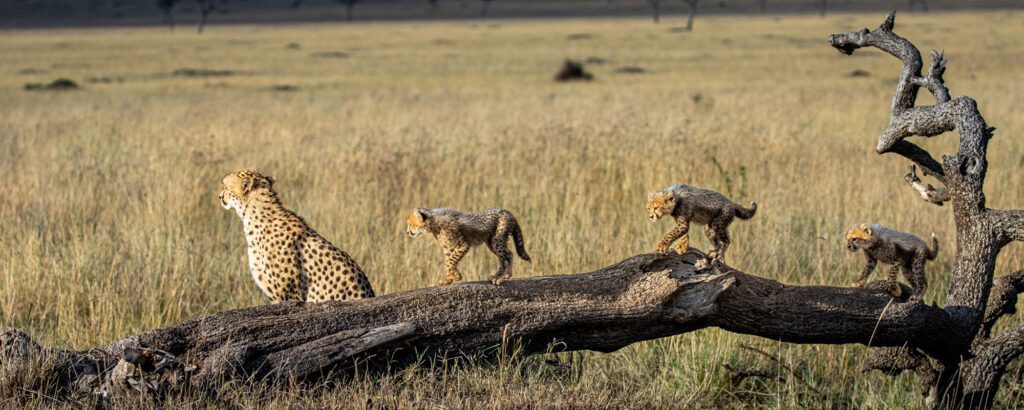
Why do the most memorable safari moments rarely match the original plan. Because wildlife timing is dynamic, and the best outcomes happen when structured itineraries are executed with disciplined flexibility.
A fixed schedule can organize a trip, but it cannot predict nature. A strong East Africa safari uses planning to protect windows, then uses field judgment to adapt inside those windows.
At Bobu Africa, we usually design routes to hold both elements at once. Enough structure to stay calm, enough flexibility to catch what cannot be scheduled. That is where memorable safari days are built.
FAQ
Q: If plans change during safari, does that mean the itinerary was weak**
A: Not necessarily. In East Africa, thoughtful plan changes often indicate strong field management. A good itinerary is designed to adapt when wildlife movement, weather, or pressure patterns change.
Q: How many nights do I need in one area to allow for these unscripted moments**
A: Three nights is a practical baseline in most ecosystems because it usually creates six prime field sessions. That gives enough repetition for adaptive decisions to produce meaningful results.
Plan Your Journey
If you want a safari that stays structured but can still capture the moments no schedule can predict, Bobu Africa can help you design a field-smart route with clear objectives, timing buffers, and adaptive decision points that protect both quality and spontaneity.